James Hardie fiber cement · Tulsa, OK
James Hardie Siding Repair in Tulsa, OK
Fiber cement siding is tough, which is why so many Tulsa builders and remodelers switched to James Hardie products over the last 20 years. Tough is not the same as damage-proof. Hardie planks crack from impacts and settling, chip from hail, and take on water at cut edges and ground contact when they were installed without the clearances Hardie specifies. We repair James Hardie and other fiber cement siding across Tulsa: planks, panels, shingles, trim, corners and soffit, cut and finished to match the boards on your wall.
Call (918) 600-9391 for a free fiber cement siding repair estimate.
- Free estimates
- Cut with dust control
- Painted or ColorPlus matched
- Hail chips sealed and painted

Quick answer: Replacing one to three James Hardie boards in Tulsa, primed and painted to match, typically costs $350 to $800. A 100 square foot section costs about $1,100 to $2,000. Hail-chipped fiber cement that is not cracked can often be repaired with prep, primer and paint instead of new boards.
Common James Hardie Siding Damage in Tulsa
Fiber cement is made of cement, sand and cellulose fiber. It does not rot or melt, and termites do not eat it. What does go wrong falls into two groups: damage from outside, and water getting in where the boards were not installed or finished correctly.
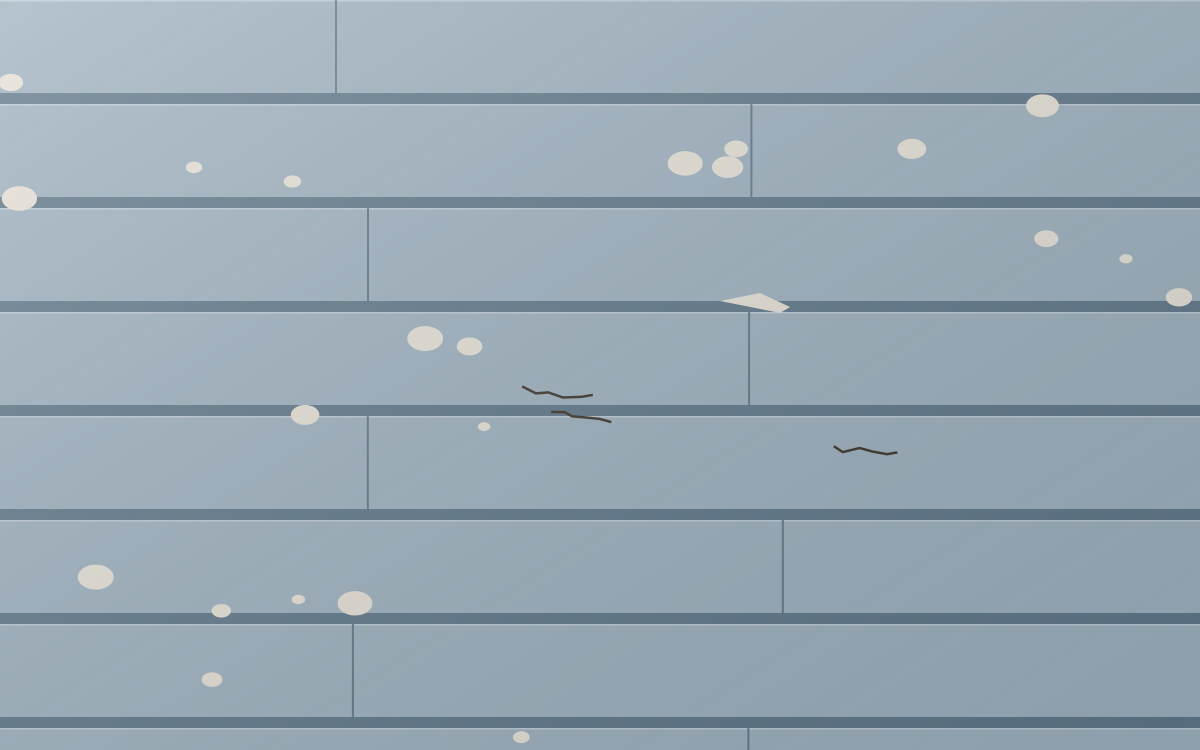
Impact, crack and hail damage
- Cracked planks: from hail, thrown rocks, mower strikes, ladders and, on new construction, from nails over-driven or placed too close to board ends.
- Hail chips: hail breaks the paint and sometimes the surface of the board, exposing the gray cement underneath. Exposed substrate absorbs water and needs to be sealed.
- Broken corners and trim: outside corners take more hits than flat walls, and HardieTrim boards crack where they are nailed near the ends.
Water, clearance and installation problems
- Swelling and delamination at the bottom edge: fiber cement that sits on a concrete slab, patio or roof surface wicks water. James Hardie's installation guide calls for a gap of at least 6 inches above finished grade, 2 inches above patios and decks, and 1 to 2 inches above roof surfaces.
- Butt joint gaps and failed caulk: joints without a flashing strip behind them let water reach the sheathing.
- Unpainted cut edges: factory-finished ColorPlus boards come painted, but every field cut needs to be sealed. Unsealed cuts flake and darken over time.
- Face nailing problems: nails driven too deep crack the board or reduce holding strength, which shows up as loose planks after strong winds.
If your house is newer and these problems are widespread, you may be looking at an installation issue rather than damage. We document what we find in case you need it for a builder or warranty discussion. Our guide can James Hardie siding be repaired explains the difference in detail.
How We Repair Fiber Cement Siding
Fiber cement repair is precise work. Boards are heavy, brittle until fastened, and the cutting dust contains crystalline silica, which is hazardous to breathe.
Removing and replacing boards
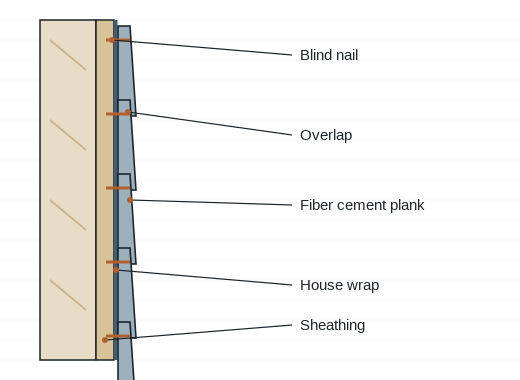
Release the damaged board. Hardie lap siding is blind nailed through the top of each board and covered by the board above. We carefully lift the board above with shims and cut the hidden nails with a hacksaw blade or oscillating tool so the board above does not crack.
Remove and inspect. The damaged board comes out in pieces, and we check the weather barrier, flashing and sheathing behind it.
Cut the new board. We cut with fiber cement shears or a dust-collecting saw outdoors, which keeps silica dust down.
Install and fasten. The replacement is installed with matching exposure and overlap. On a repair, because the nailing strip is hidden under the board above, the new board is usually face nailed at the top edge, just below the upper board's bottom, with corrosion-resistant siding nails, then the nail heads are filled and painted.
Flash and caulk. Butt joints get a flashing strip behind them, and joints at trim get a paintable, high-quality sealant.
Painting and ColorPlus matching
Primed Hardie boards are painted on site with 100% acrylic exterior paint, the type Hardie recommends. We match your existing color from a chip. For James Hardie ColorPlus factory finishes, Hardie sells matching touch-up kits and color-matched caulk in each ColorPlus color, which we use for small areas. Larger repairs on faded ColorPlus siding usually look best painted, because a brand new factory-finish board can be visibly brighter than a 10 year old wall. Repainting the whole elevation is the cleanest result on highly visible walls.
Hardie Siding Repair vs Replacement
Fiber cement lasts a long time. Hardie's lap siding products carry a 30-year limited warranty, and the material itself often lasts 50 years when kept painted. That means repair is almost always the right first move.
| Damage | Repair approach | When to replace more |
|---|---|---|
| Hail chips, no cracks | Prep, prime and repaint affected walls | Rarely needed |
| 1 to 5 cracked boards | Replace boards, paint to match | When matching texture is not available |
| Swelling at bottom courses | Replace boards, correct clearance | When most bottom courses on several walls are swollen |
| Loose boards after wind | Refasten with correct nails and spacing | When the original nailing is wrong across the house |
| Water damage behind joints | Replace boards and sheathing, add flashing | When sheathing is soft across multiple walls |
James Hardie Siding Repair Cost in Tulsa
| Fiber cement repair | Typical Tulsa price |
|---|---|
| Replace 1 to 3 Hardie planks, primed and painted | $350 to $800 |
| Replace a 100 sq ft section, painted | $1,100 to $2,000 |
| Replace a cracked outside corner or trim board | $175 to $400 |
| Seal and repaint hail-chipped wall (one elevation) | $900 to $2,200 |
| ColorPlus touch up and color-matched caulk | $150 to $350 |
| Correct ground clearance on bottom courses | $15 to $30 per linear foot |
| Replace sheathing behind damaged boards | $70 to $150 per sheet |
Fiber cement repairs cost more than vinyl because of material weight, cutting and dust control, and painting. They still come in far below replacement. Compare all prices on the siding repair cost page.
Hardie Siding and Warranties
If your James Hardie siding is fairly new, check the warranty before paying for a repair. Hardie's product warranty covers manufacturing defects, not damage from hail, impact, or installation that did not follow Hardie's instructions. Installation errors fall under your installer's workmanship warranty, if one was given. Finish warranties on ColorPlus are separate and shorter than the product warranty. Hail damage is a homeowners insurance claim, not a warranty claim. See siding insurance claims.
Fiber Cement Siding Repair Around Tulsa
Fiber cement is most common on custom and newer homes in south Tulsa, Jenks, Bixby and Broken Arrow, and on remodels across the metro. We repair it in:
Damaged by a storm? See hail damage siding repair. Other materials on the same house: wood siding repair. Back to all siding repair in Tulsa services.


Free estimate
Get a James Hardie Siding Repair Estimate
Call (918) 600-9391 or email info@tulsasidingrepair.com with photos of the damaged boards and the wall around them. If you have the original paint color name or the ColorPlus color, include it. You can also use the estimate request form.
- Call(918) 600-9391
- Email photosinfo@tulsasidingrepair.com
- HoursMon to Fri, 7:30 AM to 6:00 PM
Request received
Thanks. We have your request and will contact you within one business day. If panels are missing and rain is coming, call (918) 600-9391 so we can prioritize a temporary cover.
Questions
James Hardie Siding Repair FAQs
Can James Hardie siding be repaired?
Yes. Damaged Hardie planks can be removed one at a time and replaced, and small chips can be filled with a cement-based patch, primed and painted. Cracked boards should be replaced because cracks let water reach the board's core and the wall. Swelling at the bottom edge requires replacing the board and fixing the clearance that caused it.
How much does it cost to replace a Hardie board?
In Tulsa, replacing one to three James Hardie boards with primer and paint costs about $350 to $800. The first board carries most of the cost because of setup, cutting and painting. Each additional board on the same wall adds less. ColorPlus boards cost a little more but may not need full painting on small repairs.
Does hail damage James Hardie siding?
Hail can chip the paint on Hardie siding and occasionally crack boards, especially at corners and trim. Large hail can break off small pieces of the surface. Fiber cement is much more hail resistant than standard vinyl, but chipped areas still need sealing so water does not soak into the exposed cement. Hail damage is a homeowners insurance claim.
Can you just paint over cracked Hardie board?
Hairline surface cracks can be filled with a paintable sealant and painted. Cracks that run through the board, or that open when you press on them, mean the board should be replaced. Paint alone will not stop water from entering a through-crack, and the board can break further in freeze and thaw cycles.
How long does James Hardie siding last in Oklahoma?
Hardie lap siding is sold with a 30-year limited product warranty and commonly lasts 50 years or more in Oklahoma when it is painted every 10 to 15 years and kept clear of soil and roof surfaces. The paint, not the board, is usually the first thing to fail. Read how long siding lasts in Oklahoma.
Why is my Hardie siding swelling at the bottom?
Swelling at the bottom edge almost always means the board is wicking water from contact with a surface: soil, mulch, concrete, a deck or a roof. Hardie specifies at least 6 inches above grade, 2 inches above patios and 1 to 2 inches above roofs. Swollen boards should be replaced and trimmed to the right clearance.
Is fiber cement dust dangerous?
Yes. Cutting fiber cement releases respirable crystalline silica, which OSHA regulates as a workplace hazard. Contractors should cut outside with shears or a saw with dust collection and wear proper respiratory protection. This is one reason fiber cement repair is not a good DIY project.
Can you match James Hardie ColorPlus siding?
James Hardie sells ColorPlus touch-up kits and matching caulk for each ColorPlus color, which work well for small repairs. Because ColorPlus fades slightly over the years, a new factory-finished board may look brighter than the wall around it. On visible walls, painting the repaired area or the whole elevation gives a better match.