Wood, hardboard and LP siding · Tulsa, OK
Wood Siding Repair in Tulsa, OK
Wood-based siding fails slowly and then all at once. A board swells at the bottom edge, the paint cracks, water gets in, and a few seasons later you can push a screwdriver straight through it. We repair rotted and damaged wood siding across Tulsa, including real wood (cedar, pine lap, redwood), T1-11 plywood panels, Masonite and other hardboard, and LP siding, both the old OSB "Inner-Seal" boards and today's LP SmartSide. We cut out the bad material, check what is behind it, replace it with a board that matches, and prime and paint so the repair disappears.
Call (918) 600-9391 for a free wood siding repair estimate. A photo of the soft area and one of the full wall helps us identify the siding before we come out.
- Free estimates
- Rot cut back to sound wood
- Primed and painted to match
- Cedar, hardboard, LP and T1-11

Quick answer: Wood and hardboard siding repair in Tulsa usually costs $300 to $750 to replace one to three boards with primer and paint, and $900 to $1,800 to replace a 100 square foot section. If the sheathing behind the siding has rotted, add about $70 to $150 per 4 by 8 sheet replaced.
Types of Wood Siding on Tulsa Homes
Knowing exactly what is on your house matters more with wood than any other siding, because the products look similar once painted but fail differently and need different replacement boards.
Real wood: cedar, pine and redwood
Older Tulsa neighborhoods like Maple Ridge, Florence Park, Kendall-Whittier and the bungalow streets of Midtown often have original solid wood lap siding or cedar shingles under many layers of paint. Real wood can last a century when kept painted. It rots where water sits: bottom courses near soil or concrete, under windowsills, around hose bibs and behind gutters that overflow. Repairs use matching lap profiles, sometimes milled to match old exposure sizes.
Hardboard, T1-11 and LP siding
- Hardboard (Masonite and similar): a pressed wood fiber board used heavily on homes built from the 1970s to the late 1990s, including many south Tulsa, Broken Arrow and Owasso subdivisions. It looks like painted wood lap with a woodgrain texture. When the paint fails, it soaks up water, swells at the bottom edge, and turns soft. Several hardboard makers faced class action lawsuits in the 1990s over these failures.
- Old LP OSB siding: Louisiana-Pacific's earlier oriented strand board siding was the subject of a major class action settlement in the mid-1990s. Boards from that era often show swelling, "fuzzy" edges and mushroom-like bumps at nail heads.
- LP SmartSide: the current treated engineered wood product, sold with a 5/50 year limited warranty. It is much more durable, but cut ends still need to be sealed and the bottom kept clear of the ground and roof.
- T1-11: grooved plywood panels often found on garages, sheds, gable ends and some ranch homes. The bottom edge delaminates when it sits in water.
Not sure which you have? Our guide to Masonite hardboard siding problems shows how to tell, and the LP SmartSide repair and warranty guide covers LP specifically.
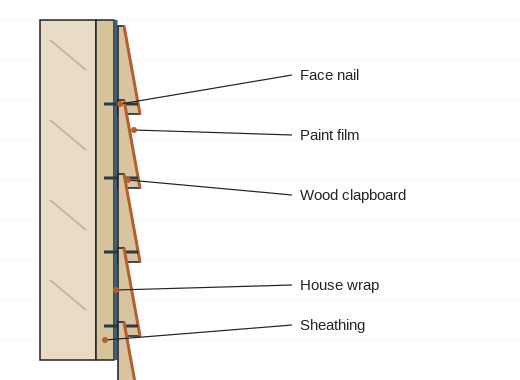
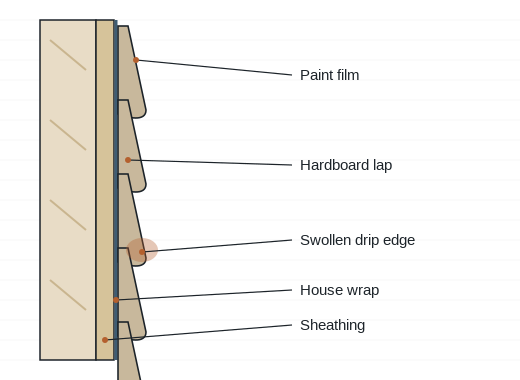
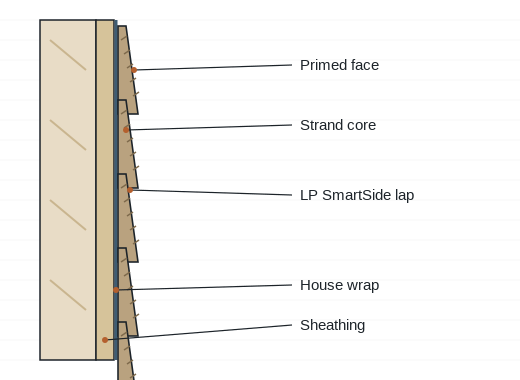
Signs Your Wood Siding Needs Repair
Most rot starts where you do not look. Walk the house and check the following spots first:
- Bottom courses within 6 to 8 inches of soil, mulch, a patio or driveway.
- Boards under windowsills and at the bottom corners of window and door trim.
- Walls below roof valleys, at roof-to-wall joints (where kickout flashing should be) and behind downspouts.
- Areas hit by sprinklers every morning.
- Board ends at corners and butt joints, where caulk has cracked.

What rot looks like: swelling or flaring at the bottom edge, paint that blisters or peels in the same spot every year, soft spots that give under thumb pressure, dark staining, fungus, or boards that crumble when probed. Woodpecker holes, carpenter bee holes and termite tunnels also show up on wood siding and often point to insects or moisture nearby (see woodpecker holes in siding). See how to spot siding rot early for a full checklist.
How We Repair Rotted Siding
A wood siding repair is only as good as the moisture control around it. Replacing a board without fixing why it rotted means you will see us again in three years.
Cut out, inspect and replace
Probe and mark. We probe each suspect board with an awl to find where sound wood starts.
Remove the damaged boards. Lap boards are cut out between studs or at butt joints and the nails cut free so the boards above are not cracked.
Inspect the wall. We check the house wrap, flashing and sheathing behind the opening. Soft OSB or plywood is cut back to solid material and replaced.
Fix the water path. This may mean adding kickout flashing at a roof line, Z-flashing above a trim board, or correcting a downspout that dumps against the wall.
Install matching boards. Boards are sized to the existing exposure and texture, nailed per the manufacturer's spacing, and joined over a flashing strip at butt joints.
Prime, caulk and paint
Every cut edge of wood, hardboard and engineered wood gets primed, because an unsealed edge is where water gets in first. We caulk butt joints and trim with a paintable exterior sealant (not at the bottom lap, which needs to drain) and apply two finish coats. We color match to your existing paint from a sample chip when possible. If the house is due for paint, matching only the repaired area can be hard, and we will tell you before work starts.
Repairing vs Replacing Wood or Hardboard Siding
Spot repair makes sense when rot is limited to a few areas and the rest of the siding is still firm and holding paint. Many 1980s and 1990s Tulsa homes reach a point where hardboard is soft on several walls, though, and the money spent on repeated spot repairs starts to rival a new wall.
| Situation | Spot repair | Replace the wall or house |
|---|---|---|
| Soft boards | A few boards on one or two walls | Soft boards on three or more walls |
| Paint | Holds paint except at rotted spots | Paint fails across the wall within 2 to 3 years |
| Sheathing | Sound | Soft or delaminated in several bays |
| Material | Real wood, LP SmartSide or T1-11 still available | Discontinued hardboard showing widespread swelling |
| Typical choice | Matching boards, primed and painted | LP SmartSide or James Hardie fiber cement |
When hardboard has to be replaced, LP SmartSide is often the most cost-effective match because its lap profiles and woodgrain look close to hardboard. James Hardie fiber cement is the most rot-resistant option. Compare them on our siding replacement page.
Wood Siding Repair Cost in Tulsa
| Wood or hardboard repair | Typical Tulsa price |
|---|---|
| Replace 1 to 3 rotted boards, primed and painted | $300 to $750 |
| Replace a 100 sq ft section with LP SmartSide, painted | $900 to $1,800 |
| Replace a T1-11 panel (4 by 8), painted | $250 to $550 |
| Replace rotted sheathing behind siding | $70 to $150 per sheet |
| Add kickout or Z-flashing during repair | $75 to $200 per location |
| Repair woodpecker or carpenter bee holes | $150 to $400 |
| Cedar shingle or custom milled lap repair | $400 to $1,200 |
Pricing depends on how far the rot goes. We give you a firm price for the visible damage and a per-board or per-sheet price for anything hidden we find once the wall is open. See the full siding repair cost guide.
Wood Siding Repair Near Tulsa
Rotted hardboard is one of the most common siding repairs we do in the suburbs that grew fast in the 1980s and 1990s. We repair wood, hardboard and LP siding in:
For fiber cement, see James Hardie siding repair. Rot often reaches roof trim too, so many wood siding jobs include soffit and fascia repair. Back to all siding repair in Tulsa services.


Free estimate
Get a Wood Siding Repair Estimate
Call (918) 600-9391 or email info@tulsasidingrepair.com. Send a close-up of the soft area and a photo of the wall, and if you know what year the house was built, include it. You can also use the estimate request form.
- Call(918) 600-9391
- Email photosinfo@tulsasidingrepair.com
- HoursMon to Fri, 7:30 AM to 6:00 PM
Request received
Thanks. We have your request and will contact you within one business day. If panels are missing and rain is coming, call (918) 600-9391 so we can prioritize a temporary cover.
Questions
Wood Siding Repair FAQs
Can rotted wood siding be repaired?
Yes. Rotted boards are cut out and replaced with matching boards, then primed and painted. Small, shallow rot on real wood trim can sometimes be repaired with epoxy wood filler, but rotted siding boards are usually replaced because the rot runs along the bottom edge and behind the face. The key is fixing the water source too.
How much does it cost to repair rotted siding in Tulsa?
Replacing one to three rotted boards with primer and paint costs about $300 to $750 in Tulsa. A 100 square foot section runs about $900 to $1,800. If rot has reached the sheathing, each 4 by 8 sheet replaced adds about $70 to $150. Final cost depends on access, paint matching and how far the rot extends.
How do I know if I have Masonite or hardboard siding?
Hardboard is smooth and dense with an embossed woodgrain, and it is thinner than real wood lap. Look at a bottom edge: hardboard shows a uniform brown fiber core, while real wood shows grain and OSB shows flakes. Some boards are stamped on the back. Homes built in the 1970s to 1990s are the most likely to have it.
Does homeowners insurance cover rotted siding?
Usually not. Rot from long-term moisture, wear, poor maintenance or installation is excluded from most homeowners policies. Insurance may cover rot that results from a sudden covered event, like a storm that tore off flashing, if you report it promptly. Read does homeowners insurance cover siding for the details.
What is the best replacement for rotted hardboard siding?
LP SmartSide is often the best match for hardboard because its profiles and texture look similar and it costs less than fiber cement. James Hardie fiber cement is the most resistant to rot, termites and hail but costs more and is heavier to install. For small repairs, we match whichever product blends best with your existing boards.
Is LP SmartSide still under warranty if it rots?
LP SmartSide carries a 5/50 year limited warranty: full labor and material coverage for the first five years, then prorated material coverage. Claims usually require that the siding was installed and maintained to LP's instructions, including ground clearance and sealed cut edges. Our LP SmartSide repair guide explains how to check.
Why does my wood siding keep rotting in the same place?
Repeat rot in one spot almost always has a water source: a missing kickout flashing at a roof line, an overflowing gutter, a sprinkler head, soil or mulch too close to the boards, or a window without proper flashing. Replacing the board without fixing that source just resets the clock. We look for the source on every repair.
Can you paint over rotted siding?
No. Paint traps moisture in rotted wood and hides the problem until it spreads. Soft boards should be replaced and the area primed and painted fresh. Boards with only surface weathering and no softness can be scraped, primed and repainted. If you are planning to paint the house, have rot repaired first.