
Short answer: Small chips and hairline cracks in Hardie siding can be filled with a cement-based patch or paintable sealant, then primed and painted. Through-cracks, broken corners, swollen bottom edges and boards with large impact damage should be replaced. Swelling also requires fixing the clearance or flashing problem that let water in.
Repair Options by Damage Type
| Damage | Repair or replace | How it is done |
|---|---|---|
| Paint chips, no substrate damage | Repair | Clean, prime, paint |
| Chip exposing gray cement | Repair | Fill with cement patch, prime, paint |
| Hairline surface crack | Repair | Paintable sealant, paint |
| Through-crack (moves when pressed) | Replace | New board, face nailed, painted |
| Broken corner or trim | Replace | New trim piece |
| Swollen or delaminated bottom edge | Replace | New board, correct clearance |
| Loose board after wind | Repair | Refasten with correct nails |

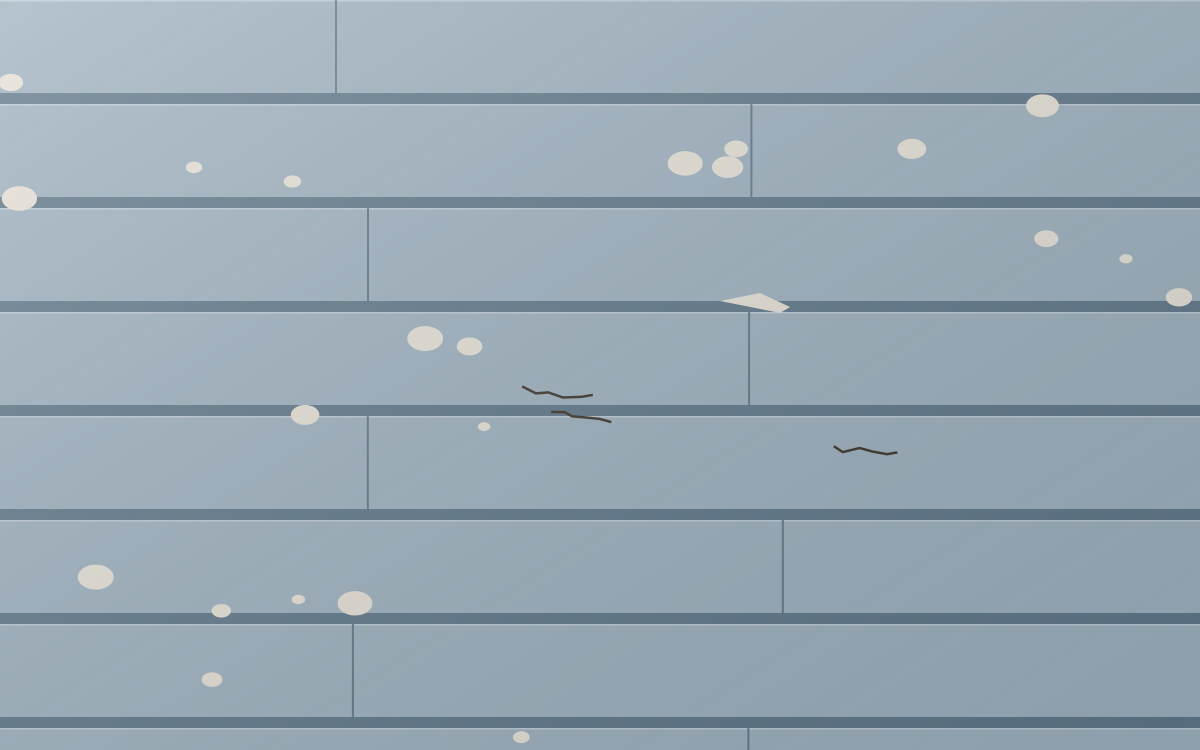
How a Hardie Board Is Replaced
Removing the damaged board
Shim or gently lift the board above to reach the nails along the top of the damaged board.
Cut the hidden nails with a hacksaw blade or oscillating tool. Prying risks cracking the board above.
Break the damaged board out in pieces if needed, and pull remaining nail shanks.
Inspect the house wrap and sheathing.
Installing the new board
Cut the new board with fiber cement shears or a dust-collecting saw, outdoors.
Prime any cut edges.
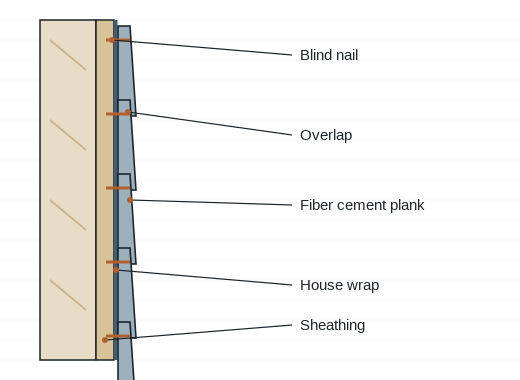
Slide the board into place with the correct overlap, usually about 1 1/4 inches.
Face nail near the top of the board, just under the board above, with corrosion-resistant siding nails, keeping nails flush, not overdriven.
Install a flashing strip behind any butt joint, caulk joints at trim with a quality sealant, fill nail heads and paint.
Why Hardie Swells: Clearance Problems
Fiber cement does not rot, but it can wick water and swell or delaminate when it sits against a wet surface. James Hardie's installation instructions call for:
- At least 6 inches above finished grade.
- At least 2 inches above patios, porches, steps and walkways.
- 1 to 2 inches above roof surfaces, with kickout flashing at roof-to-wall joints.
- Gaps at window heads and horizontal trim, with flashing.
Swollen boards at these spots point to an installation issue. The repair is to replace the board and trim it to the right clearance.
Warranty: When to Call Hardie First
James Hardie offers a limited product warranty, 30 years on its lap siding products, covering manufacturing defects. It does not cover hail, impact, settling or damage from installation that did not follow Hardie's instructions. ColorPlus finishes have their own, shorter finish warranty. If your siding is relatively new and failing broadly without an obvious cause, contact your installer and James Hardie before paying for repairs, and keep photos. Damage from hail or a falling limb is an insurance matter, not a warranty claim.
DIY or Hire a Pro?
Small paint touch-ups and chip fills are reasonable DIY projects. Replacing boards is harder than it looks: the boards are heavy and brittle until fastened, prying cracks neighboring boards, and cutting creates crystalline silica dust that OSHA regulates as a respiratory hazard. For board replacement, hire someone with the right shears and dust control.
Get Your Hardie Siding Repaired
Call (918) 600-9391 for a free estimate on James Hardie siding repair in Tulsa. Typical cost: $350 to $800 for one to three boards with paint. Related: which siding resists hail best.
James Hardie Repair FAQs
How do you fix a chip in Hardie board?
Clean the chip, fill it with a cement-based patching compound or a quality paintable exterior filler, let it cure, then prime and paint. For ColorPlus siding, Hardie sells touch-up kits in each factory color. Seal chips quickly so water does not soak into exposed cement.
Can you caulk cracks in Hardie siding?
Hairline surface cracks can be sealed with a paintable sealant and painted. Through-cracks, which flex or open when pressed, should be fixed by replacing the board. Caulk will not hold a structurally cracked board together through freeze and thaw cycles.
Is Hardie siding damage covered by warranty?
James Hardie's warranty covers manufacturing defects. It does not cover impact, hail, settling or installation errors. Installation problems may be covered by your installer's workmanship warranty. Hail and storm damage go through homeowners insurance.
How much does it cost to replace a Hardie board in Tulsa?
Replacing one to three James Hardie boards in Tulsa, primed and painted, typically costs $350 to $800. Corners and trim pieces run about $175 to $400 each. See the siding repair cost page for more.


