
Short answer: Measure the exposure (height of each visible course) and count the laps per panel, look for brand and color markings on the back of a panel or in leftover stock, then compare samples against the wall in daylight. If the color has faded, use a salvage swap: move original panels from a hidden wall to the repair and put new panels where no one looks.
Step 1: Identify the Profile
The profile is the shape of the panel. It has to match exactly or the courses will not line up.
Measurements to take
- Exposure: the height of each visible course, measured from the bottom of one lap to the bottom of the next. Common sizes are 4 inch, 4.5 inch and 5 inch.
- Laps per panel: most horizontal vinyl is "double" (two laps per panel, like double 4 or double 5) or "triple 3."
- Style: traditional clapboard, Dutch lap (with a concave top on each lap), beaded, or vertical board and batten.
- Butt height: the thickness of the bottom edge, which affects the shadow line. Premium panels often have a deeper butt.
- Panel length: most are 12 feet 6 inches.
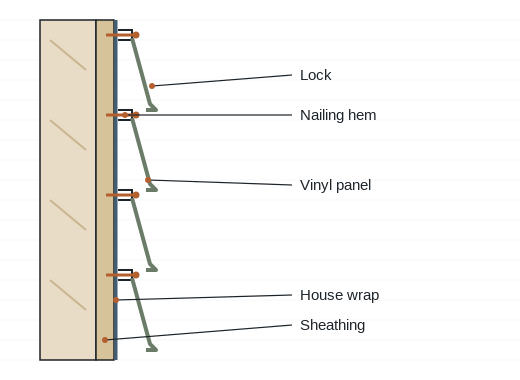
Where to find brand markings
Unlock a panel at a corner or behind a downspout and look at the back. Many panels are stamped with a manufacturer name, a product line and a lot or date code. Common brands on Tulsa-area homes include CertainTeed, Royal, Mastic, Alside, Variform, Georgia-Pacific, Heartland and Ply Gem. Leftover boxes in your garage are even better because the label shows the color name.
Step 2: Find the Color
Once you know the brand and product line, a siding supplier can tell you whether the color is still made. Manufacturers change color lines every few years, and some brands and product lines have been discontinued or sold to other companies. If the color is still available, order a sample piece and hold it against your wall in daylight before buying a full box.
Step 3: Account for Fading
This is where most matches fail. Vinyl fades as UV breaks down its surface pigments. Dark colors fade faster than light ones, and south and west walls fade faster than north walls in Oklahoma sun. A new panel in the exact original color can look noticeably darker or more saturated than a 10 to 15 year old wall.
| Siding age | Typical fade vs new | Matching approach |
|---|---|---|
| Under 5 years | Little | New panel in the same color |
| 5 to 10 years | Slight; noticeable on dark colors | New panel or salvage swap on visible walls |
| 10 to 20 years | Moderate | Salvage swap, or replace wall to a corner |
| 20+ years | Significant; often chalky | Salvage swap, full-wall replacement or re-side |
The Salvage Swap
A salvage swap is the trick professionals use most. Every house has walls nobody sees well: behind a fence, inside a screened porch, behind a chimney chase, on a garage side facing a neighbor's fence. Those panels have the same profile and almost the same fade as your damaged wall. We remove them, install them in the visible repair area, and put new panels in the hidden area. The repair matches, and the new panels are where no one will notice the color difference.
When No Match Exists
- Replace to a natural break. Replace the whole wall to a corner post, so the color change sits at a corner where two walls are rarely seen together.
- Use a contrasting accent. On gables, a different profile like shakes or board and batten in a coordinating color can look intentional.
- Paint the vinyl. Vinyl can be painted with vinyl-safe exterior paint in a color no darker than the original, though it adds upkeep.
- Insurance matching. If the damage was from a storm, documented match problems can lead your insurer to replace a full elevation. See siding insurance claims.
Need Help Matching Your Siding?
Send a photo of your siding and, if possible, the back of a panel to (918) 600-9391 or info@tulsasidingrepair.com. Our vinyl siding repair service in Tulsa includes profile and color matching. Related: can you replace just one piece of siding.
Matching Vinyl Siding FAQs
How do I find out what brand my vinyl siding is?
Look at the back of a panel, which you can reach by unlocking one at a corner or behind a downspout. Many manufacturers stamp a name or code there. Leftover boxes in your garage or builder paperwork may also list the brand and color.
Can discontinued vinyl siding be matched?
Often, yes. Some suppliers keep older stock, and other brands make close profiles. When the color is gone, a salvage swap from a hidden wall or replacing the full wall to a corner gives the cleanest result.
Why does new vinyl siding not match the old?
Vinyl fades in the sun. After years of UV exposure, especially on south and west walls, the original panels are lighter and less saturated than a new panel in the same color. The longer the siding has been up, the bigger the difference.
Can you paint vinyl siding to match?
Yes, vinyl can be painted with a paint labeled vinyl safe, in a color the same or lighter than the original so it does not absorb too much heat and warp. Painting adds a maintenance cycle, so it works best on small areas or when repainting the whole house.


